





The logistics market is undergoing a huge digital transformation. As e-commerce grows, customer expectations rise, and the pressure to operate efficiently intensifies, businesses are abandoning traditional dispatch methods. Platforms offering instant intra-city trucking, courier booking and on-demand fleets are grabbing huge market shares. For founders, enterprise leaders and business owners, creating apps like Porter is not a futuristic experiment anymore, but a very profitable business model.
Did you know that 73% of MSMEs reported lower transportation costs after adopting technology-enabled intra-city logistics platforms? Additionally, 95% reported improved on-time deliveries, highlighting how digital logistics apps are transforming business operations across India.
For forward-looking decision-makers, setting up a custom logistics network through specialised development agencies like Clonifynow is a quick way to enter this multi-billion dollar ecosystem.
The Shift to Digital Frameworks via On Demand Logistics App Development
The swift growth of trade in towns makes it necessary to allow for rapid changes in the services of transport. There are considerable pain points in day to day operations because of dependence on human freight brokers, phone discussions and uncertainty of driver arrival. Modern business needs predictability, quickness and crystal clear transparency.
Why the Unorganized Logistics Sector Is Failing
Traditional transport depends on fragmented local networks. This creates predictable business risks including:
- No upfront price transparency leading to variable operational overheads.
- Long wait times during busy market hours.
- Without cargo verification, businesses are vulnerable to losses in transit.
Strategic Drivers of Digital Logistics Platforms
Through specialised on demand logistics app development, businesses can build structured ecosystems that remove these historic issues. Automation alters everything.
- Instant Booking Execution: Stop wasting hours calling multiple truck drivers or regional brokers.
- Aggregated Supply Moats: Ensures a multi-category fleet, always. Two wheelers for quick document dispatch or large commercial trucks for bulk industrial distribution.
- Dynamic Route Mapping: Employs specialised routing engines to reduce fuel wastage and cost per trip.
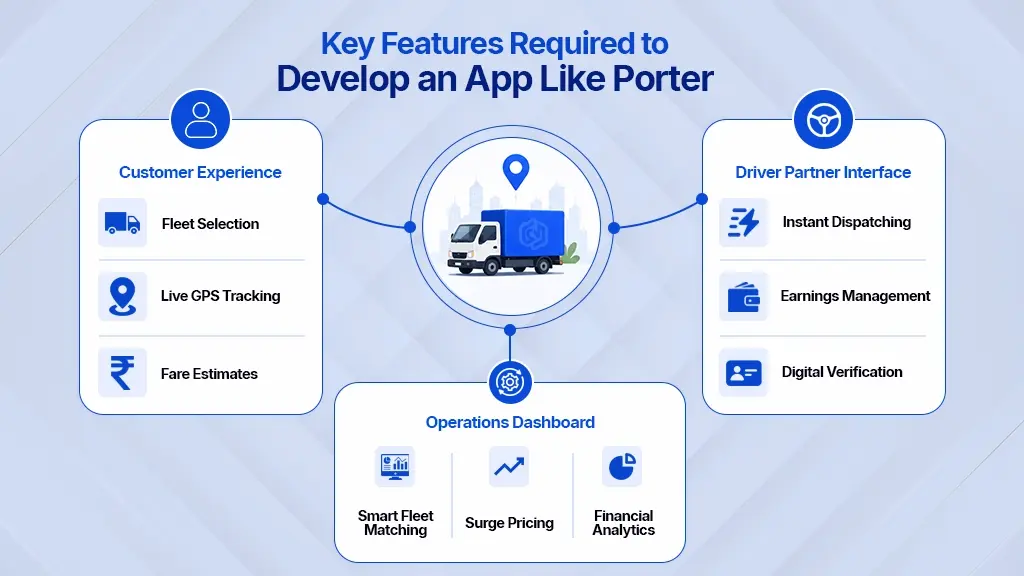
Key Core Features Required to Develop an App Like Porter
The process of building a logistics marketplace that is ready for market requires balancing three distinct user experiences at once: the end-consumer, the vehicle operator, and the internal operations manager. So, the architecture of your software should incorporate these parts in one to successfully develop an app like Porter.
The Customer Application Experience
- Multi-Category Fleet Selection: Customers pick the exact vehicle size they need, from two-wheeler couriers to huge commercial mini-trucks.
- Fare Estimation Engine: Shows the available distance-based pricing (including wait-time factors) before the vehicle is dispatched.
- Real-Time GPS Tracking: Clear view of transit routes with delivery ETAs dropping on user screens.
The Driver Partner Interface
- Instant Dispatching: Notifies drivers of route coordinates and instant delivery alerts through the next active driver.
- Earnings Management Console: Detailed payouts, daily and weekly breakdown of basic rates, route bonuses and tips.
- Digital Onboarding Vault: Native functionality to verify driver identity with vehicle registration cards, driver licenses and verification credentials.
Many businesses rely on specialized app development services to build secure driver management and verification systems.
The Central Control Operations Dashboard
- Dynamic fleet dispatching uses patented proximity algorithms to automatically match client pickup requests with the closest available truck that can handle the job.
- Surge Pricing Settings: Changes the pricing of active transport on the fly owing to local vehicle shortages or bad weather conditions.
- Comprehensive Financial Analytics: Automatically captures regular platform commissions, corporate overhead and net driver earnings.
Modern Industry Trends Boosting Platforms Built via Porter Clone App Development Services
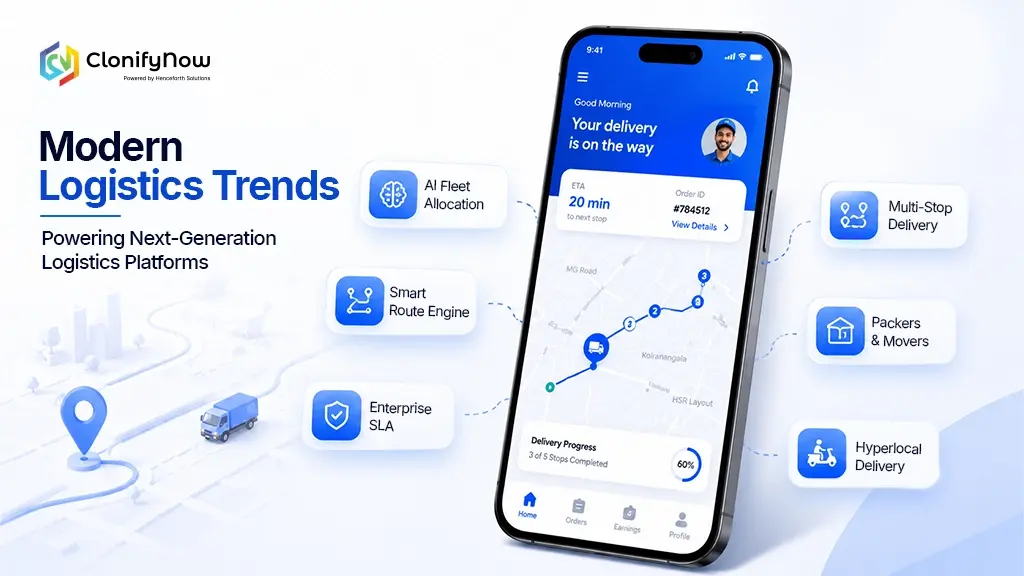
Businesses looking to accelerate their entry into the logistics sector often choose a porter clone solution as a foundation, allowing them to launch faster while still customizing features to meet specific operational requirements. With skilled Porter Clone App Development Services, organisations can easily deploy sophisticated features right out of the box.
The Integration of Deep Data Operations
- Predictive Machine Learning Fleet Allocation: Platforms can use historical booking data to proactively move idle vehicles to high demand locations before any orders are received.
- Smart Route Optimisation Engines: Smart routing algorithms construct routes around high traffic, cutting timeframes of multi-stop routes by a large margin.
Growing Enterprise Focus and Specialized Supply B2B Features
- Reliable SLA Management: Big enterprise companies need hard delivery dates. Digital platforms are shifting from simple spot bookings to regular corporate contracts.
- Bulk Multi-Stop Deliveries: Shippers can plan a single vehicle and fill it with many client drops, automatically determining the most effective route.
High Margin Cross-Selling Strategy Upgrades
- Integrated Packers and Movers Modules: Extends traditional vehicle distribution networks with complete office and home relocation features.
- Hyperlocal Parcel Delivery: Leverages two-wheeler networks for micro-freight items, multiplying daily transaction volumes.
Evaluating the Final Financial Cost to Create App Like Porter
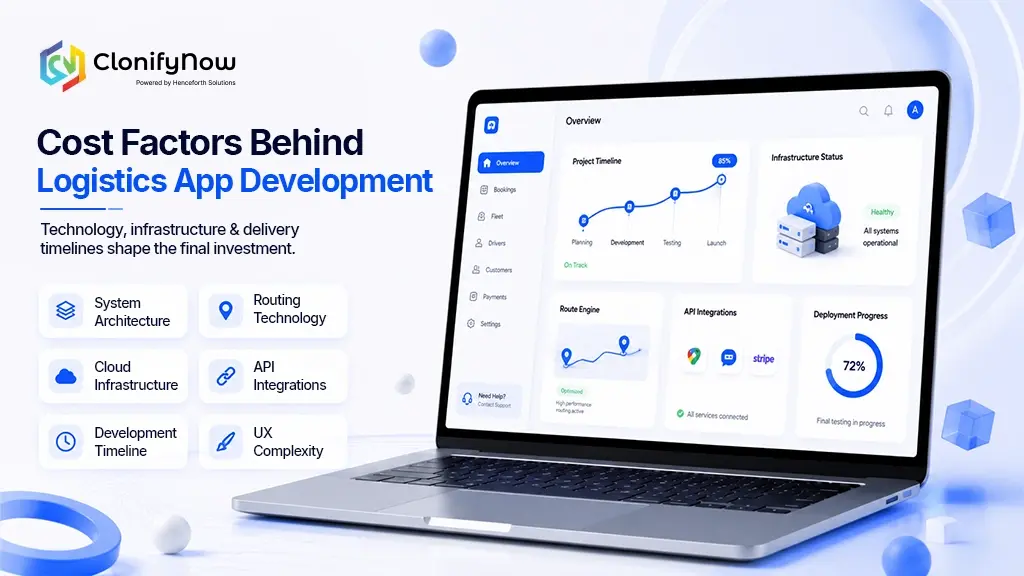
If you’re looking to build an enterprise level application, it’s important to understand the financial framework. So, the total cost to create app like porter depends on many factors, the most important being: depth of technical design, local rates of developers, and your launch deadline.
| Development Factor | Standard MVP Setup | Full Scale Enterprise Edition |
| System Architecture | Standard Cross-Platform (Flutter/React Native) | High-Performance Native (iOS and Android Separate) |
| Mapping and Routing Tech | Basic Location APIs | Advanced Route Customization Engines |
| Backend Architecture | Shared Cloud Systems | High-Availability Dedicated Cloud Nodes |
| Timeline Estimate | 2 to 3 Months | 5 to 8 Months |
Primary Drivers of Software Construction Costs
- Design and UX Complexity: Obviously, the reality of building smooth, low-latency map interfaces on a wide range of mobile models adds to development time.
- Third-Party API Integrations: There is a fixed monthly or usage-based software fee for connecting dedicated map systems, SMS alerts and verified payment gateways.
- Geographical Team Placement: Depending on whether you opt for local internal teams, nearshore specialists or offshore development hubs, technical development rates can vary drastically.
Launching a Scalable On Demand Logistics Application
The trick in this space is to find the right mix between custom development and time-to-market. Many startups and enterprise groups build every single component from scratch, which results in long delays and massive research costs. With leading product accelerators like Clonifynow, businesses can tap into battle tested, secure and production ready architectures that dramatically accelerate time to launch.
A laser focused market entry strategy is best served by launching alternative apps like Porter. Focus on building a tight supply network in one city or a high-volume industrial hub, and expand outwards later. Focus on earning the trust of small business owners by offering crystal-clear pricing and highly reliable driver arrival times.
FAQs About Building Apps Like Porter
How much does it cost to build an app like Porter?
The price depends on the complexity of the application, features and the platform that you choose. Basic logistics MVPs cost $3,000-$6,000 while enterprise-grade systems with AI-routing and analytics might cost more.
What are the must-have features in a Porter-like logistics app?
Some of the important features are real time GPS tracking, fare estimation, driver management, rapid booking, route optimisation, digital payments, notifications and an admin dashboard to monitor fleet and control operations.
How long does it take to develop a logistics app?
MVPs that are focused often take 2–4 months to launch. End to end logistics ecosystems with customer, driver and admin apps usually take 5-9 months or more.
Why are businesses investing in on-demand logistics apps in 2026?
The demand for e-commerce is increasing and customers are expecting faster delivery and operational efficiency, which is leading enterprises to leverage digital logistics solutions that enable automation and real-time insight.
Can AI improve the performance of logistics apps?
Yes. AI-powered fleet allocation, predictive demand forecasting and intelligent route optimisation reduce delivery times, increase vehicle utilisation and significantly reduce transportation costs.


 +91-9464826889