





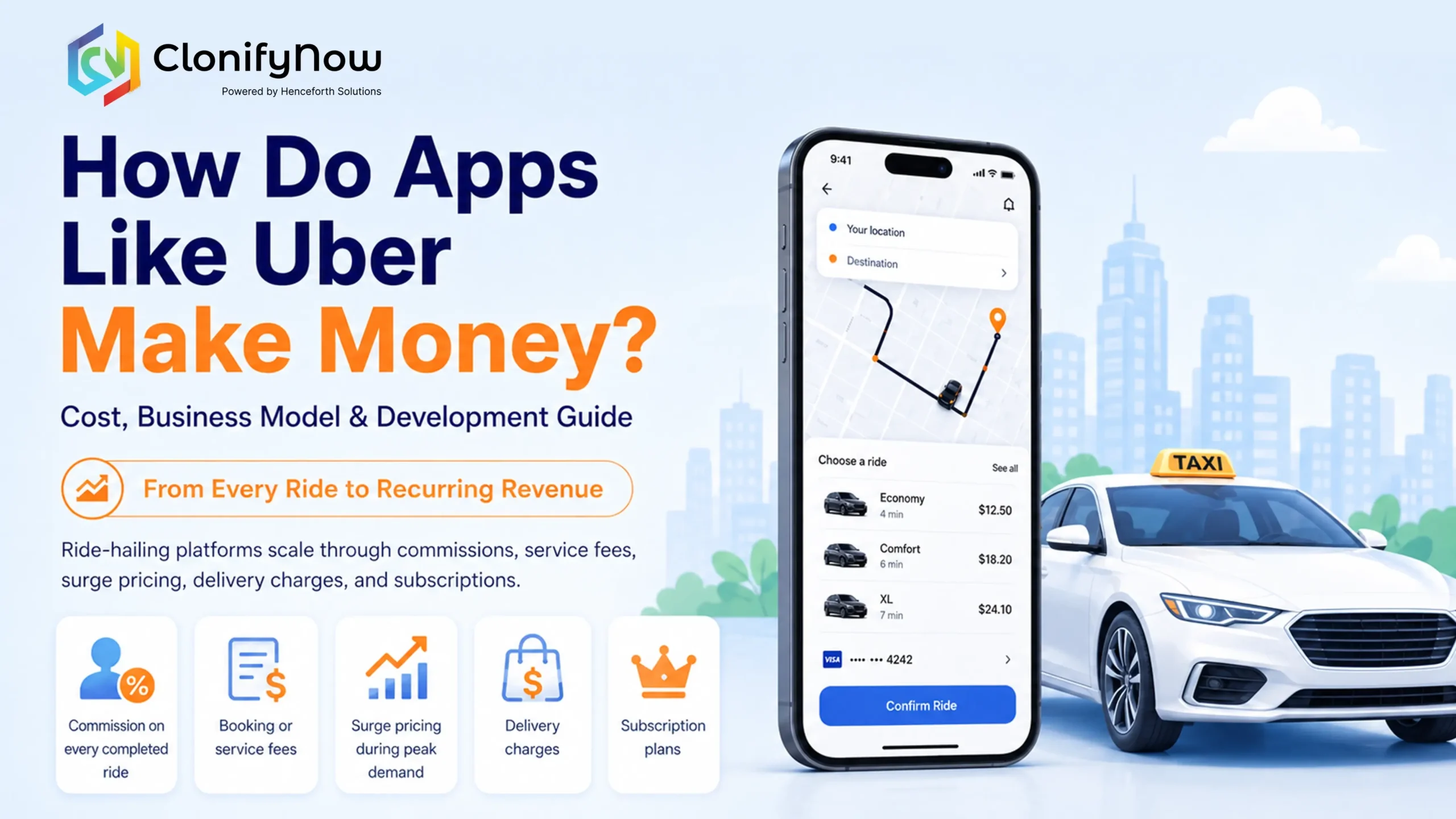
If you are planning a taxi or ride-hailing platform, the first question is usually how do apps like Uber make money and whether the model is strong enough to scale. Many founders also evaluate the cost to develop an app like Uber before validating the business model. The answer is simple: these apps earn through ride commissions, service fees, surge pricing, delivery charges, and partner subscriptions. The real power comes from turning every ride, booking, and transaction into recurring revenue.
Did You Know? Uber reported $37.2 billion in revenue in 2023, showing how large ride-hailing and delivery marketplaces can become when they scale globally. This proves that the business model is not just popular; it is commercially powerful and highly repeatable.
A brand like ClonifyNow can help businesses build similar digital-first platforms faster with a structured approach. When you understand the model clearly, you can design your own platform with better pricing, stronger retention, and more predictable profit.
What drives revenue in a ride-hailing platform?
A successful taxi app does not depend on one income stream. It combines several money-making channels so the business keeps earning across different trip types and user groups. This is where the model becomes flexible, scalable, and attractive for investors. The strongest platforms focus on transaction volume, user convenience, and partner activity. A platform can increase earnings by improving the number of completed bookings, reducing cancellations, and encouraging repeat use. That is why many founders compare the cost to develop an app like Uber with the long-term revenue potential before launching.
Here are the main revenue levers:
- Ride commissions from drivers or fleet partners.
- Customer fees for booking and convenience.
- Premium pricing during busy hours.
- Delivery and logistics charges for extra services.
- Paid placements or promotional offers for partners.
ClonifyNow builds products that can support these earning paths from day one, making the business model easier to execute.
Additional Revenue Sources
Beyond the core ride model, platforms like Uber have built several additional income streams that make the business more stable and diversified.
Delivery Fees
Platforms earn from food, grocery, and parcel delivery charges. Uber Eats, for example, applies delivery fees per order along with a service charge and restaurant commission on every transaction.
Premium or Priority Services
Faster or upgraded services generate higher revenue. Products like UberX, Uber Black, or scheduled rides allow users to pay more for comfort, speed, or reliability.
Subscriptions and Memberships
Recurring plans create predictable monthly income. Uber One is a subscription that gives users discounts and benefits in exchange for a monthly fee, which creates a loyal repeat customer base.
Ads and Featured Listings
Businesses can pay for promoted visibility inside the app. Restaurants, local merchants, or fleet partners can pay to appear higher in search results or featured sections of the platform.
Key points:
- Delivery services add a second major revenue line
- Premium tiers increase average order value
- Subscriptions improve retention and recurring income
- In-app advertising adds a passive revenue stream.
Why This Model Works?
Businesses exploring an Uber-like app can benefit from a flexible platform that supports rides, delivery, and subscriptions from day one.
Two-Sided Marketplace
The platform connects users with drivers, couriers, or merchants. It does not own vehicles or warehouses. It simply facilitates the transaction and earns from both sides of the interaction.
Scalable Infrastructure
Digital platforms can grow without heavy physical expansion. Adding a new city does not require building offices or hiring large teams. The technology handles routing, dispatch, payments, and support automatically.
Multiple Income Streams
Several revenue channels make the model more stable. But how this compares to a carpooling revenue model, well, a platform that earns from rides, delivery, subscriptions, and ads is far less vulnerable than one that depends on a single fee source.
Key points:
- No ownership of physical assets needed
- Growth happens through software, not infrastructure
- Diversified revenue protects against market shifts
- ClonifyNow builds platforms designed with this logic in mind
Factors That Affect Earnings
Even with a strong model, earnings depend on how well the platform is operated. These are the key variables that affect profitability.
Market Density
More users in one area usually means more transactions. A platform in a dense city with high commute demand will naturally generate more rides and better commission income than a low-density market.
Partner Availability
Enough drivers or couriers keep orders moving. If supply is low, customers wait longer, cancel more, and trust the platform less. Maintaining a healthy driver-to-rider ratio is critical for growth.
Customer Retention
Repeat users improve long-term revenue. Acquiring a new customer is more expensive than keeping an existing one. Features like saved addresses, reorder options, and loyalty rewards improve return rates.
Operating Efficiency
Lower costs and faster fulfillment improve margins. Smarter dispatch logic, fewer failed deliveries, and better support tools reduce waste and improve the platform’s overall profit performance.
Key points:
- Dense markets generate more frequent transactions
- Driver supply directly affects order completion rates
- Retention tools reduce customer acquisition costs
- Efficient operations improve margins without more users
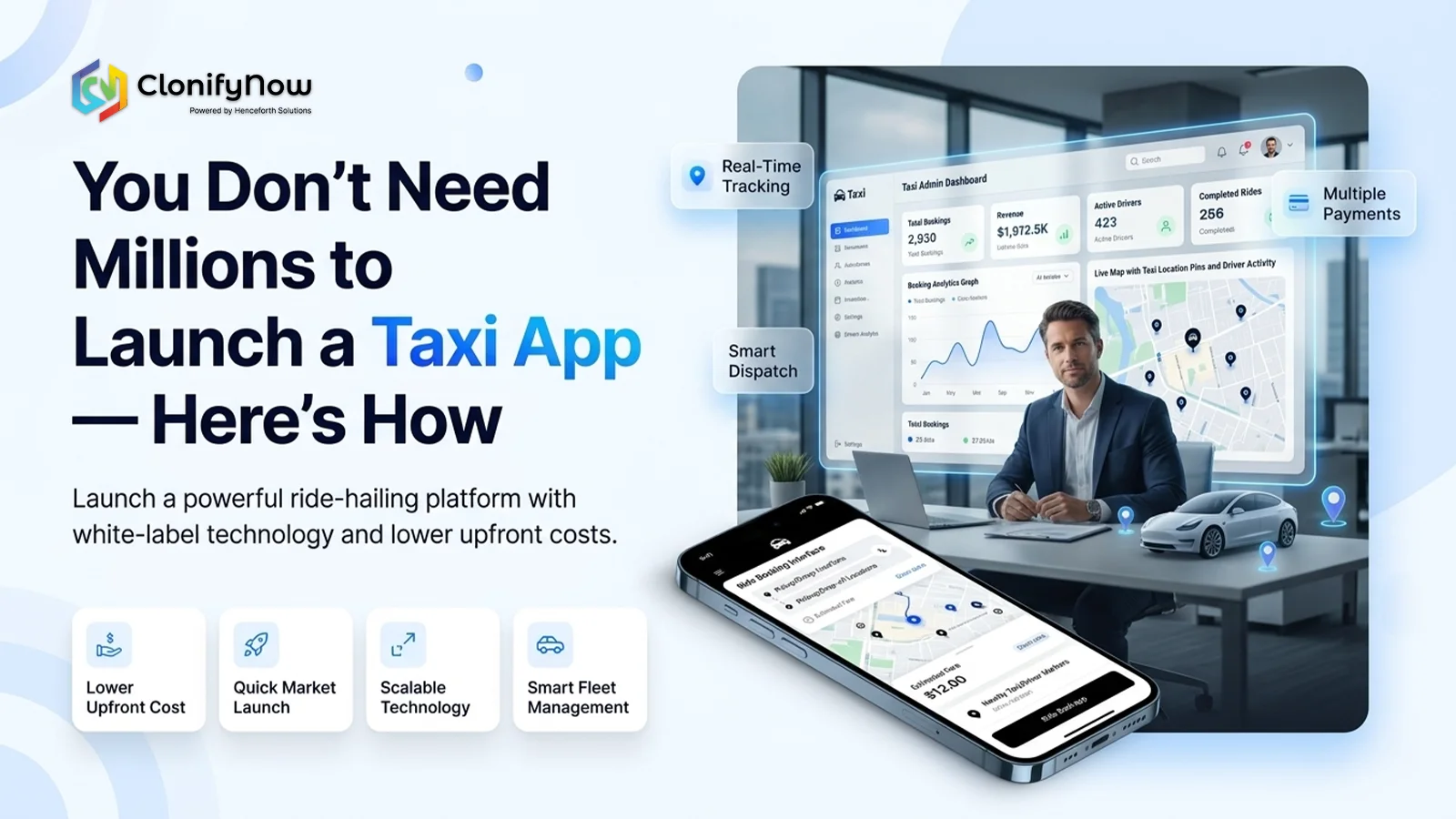
A white label taxi app built with all these factors in mind gives businesses a faster and more affordable route to market than building from scratch.
Start Building Your Own Platform Today
Now you know how do apps like Uber make money and what makes the model profitable at scale. The business logic is proven, the technology is accessible, and the opportunity exists in markets across the world. If you are ready to launch your own ride-hailing or delivery platform, ClonifyNow offers ready-made and fully customizable solutions that help you go live faster with less risk. Whether you want a white-label taxi app or a custom build, the right platform can turn your idea into a real business.
FAQs on how do apps like Uber make money
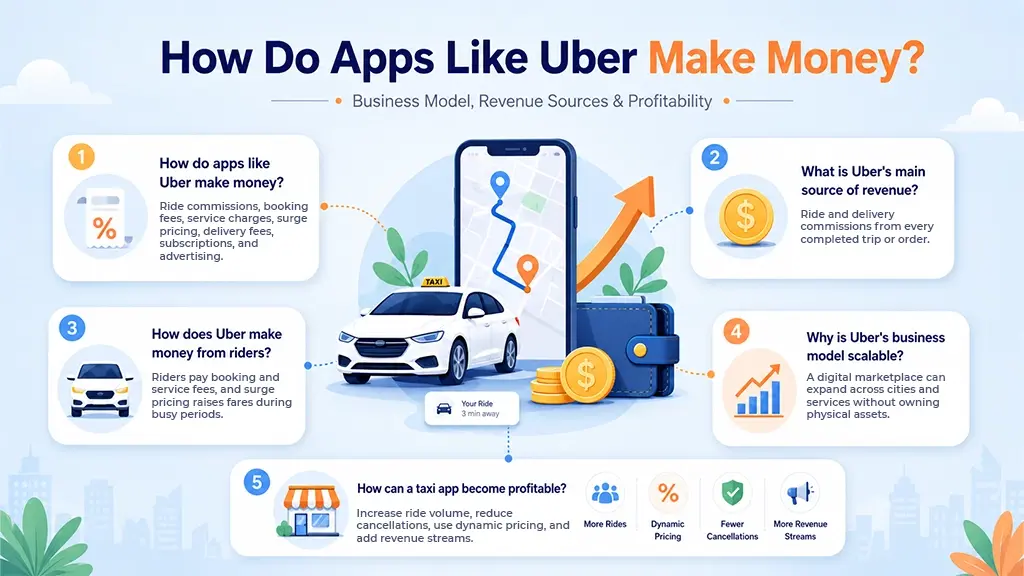
1. How do apps like Uber make money?
Apps like Uber earn through ride commissions, booking fees, service charges, surge pricing, delivery fees, subscriptions, and advertising. Each transaction on the platform generates income from one or more of these sources.
2. What is Uber’s main source of revenue?
Ride and delivery commissions are the main income source. Uber takes a percentage of every completed trip and delivery, which adds up significantly at scale.
3. How does Uber make money from riders?
Uber charges riders a booking fee and a service fee on each trip. During high-demand periods, surge pricing increases the total fare, which also increases Uber’s share.
4. Why is Uber’s business model scalable?
It uses a digital marketplace that can grow across cities and service categories without owning physical assets. The same platform serves riders, delivery customers, and business clients, creating multiple growth paths from one product.
5. How can a taxi app become profitable?
It becomes profitable by increasing ride volume, reducing cancellations, using dynamic pricing, and adding extra revenue streams.



 +91-9464826889